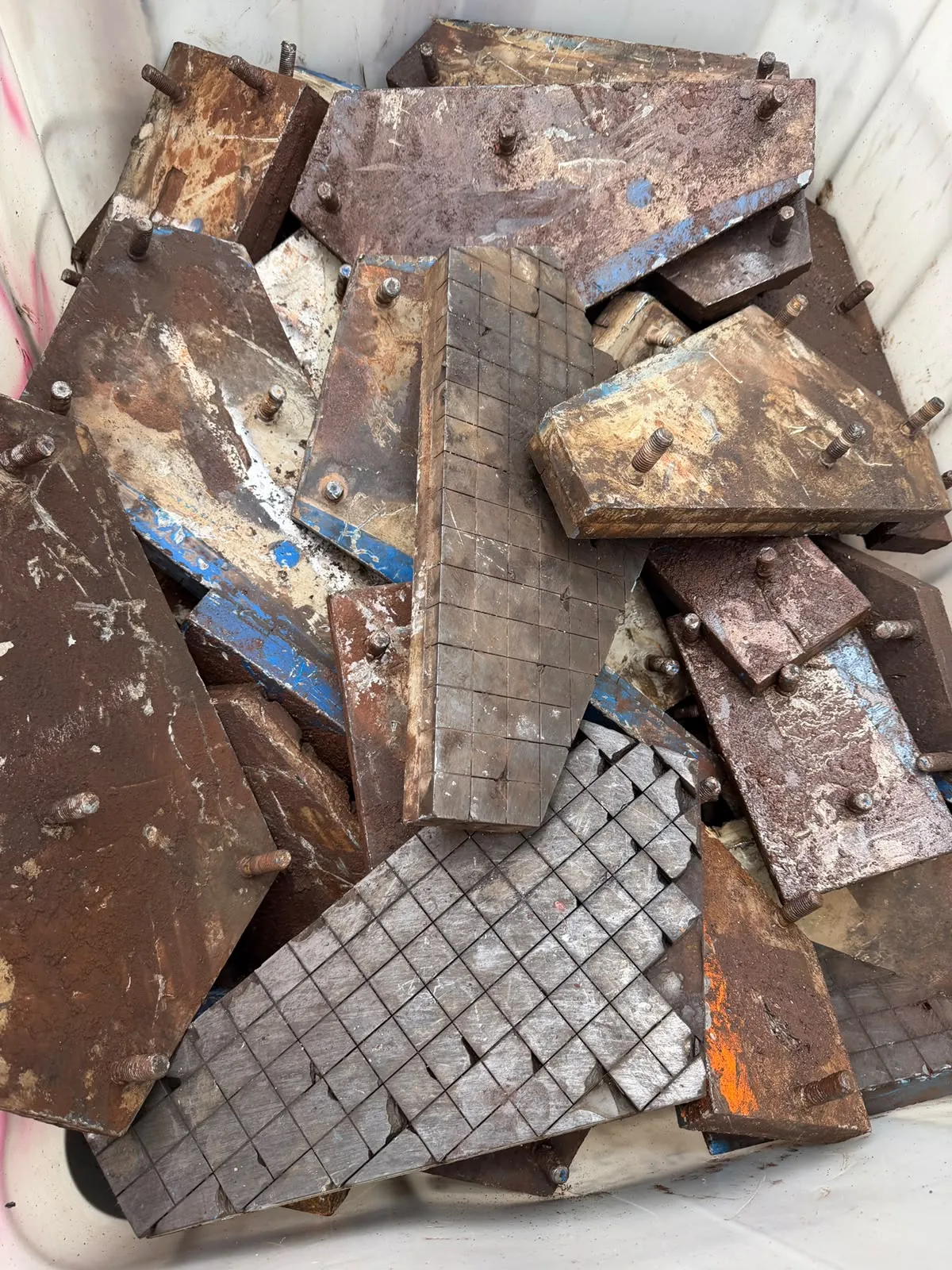
Bucket teeth, mill liners and carbide wear plates come off heavy plant looking like ordinary steel, and a general scrap yard often prices the lot the same way: by weight, mixed. Plant maintenance turns out more high-value alloy than the tonnage suggests: tungsten carbide in wear plates and HPGR studs, manganese and chrome alloy in liners and jaw plates, all riding inside what looks like one steel stream.
We sort every batch by alloy family before it’s priced, so carbide wear parts, manganese liners and plain wear steel each get valued on what they are, not lumped into one mixed rate. This matters most at a mill reline or a shutdown change-out, when months of worn liners, teeth and wear plates come off in one go and the difference between a mixed rate and a sorted one adds up across the whole load.
Carbide wear plates and HPGR studs are priced the same way as tungsten carbide drill string, on tungsten content and condition against the same reference. A full reline or shutdown clear-out is usually a job for site cleanups and laydown clearances rather than a single bin, and fixed plant crews working alongside a mining operation often run both streams through the same gate.
Whether a bin sits on the ground ahead of a change-out is decided case by case, weighing the relationship, site, material and expected weight, and bins are generally set up for repeat maintenance accounts rather than a single clear-out. The bin moves on your existing backload; we don’t run a skip truck to pick it up. A yard walkthrough before a reline or shutdown is free but needs to be booked, since the team isn’t always at Malaga.
A quotation on a reline or shutdown-scale load carries its own expiry, generally 24 or 72 hours depending on the material and market, so it’s worth asking close to the change-out window rather than weeks ahead. Once weight and grading are confirmed, payment is arranged by EFT, though material still being sorted takes longer to settle.