
Independent research
Recycling reduces environmental impacts, research shows.
Furberg, Arvidsson and Molander, writing in Journal of Cleaner Production 209 (2019), found reductions of 22 to 100 percent across the metal categories they assessed.
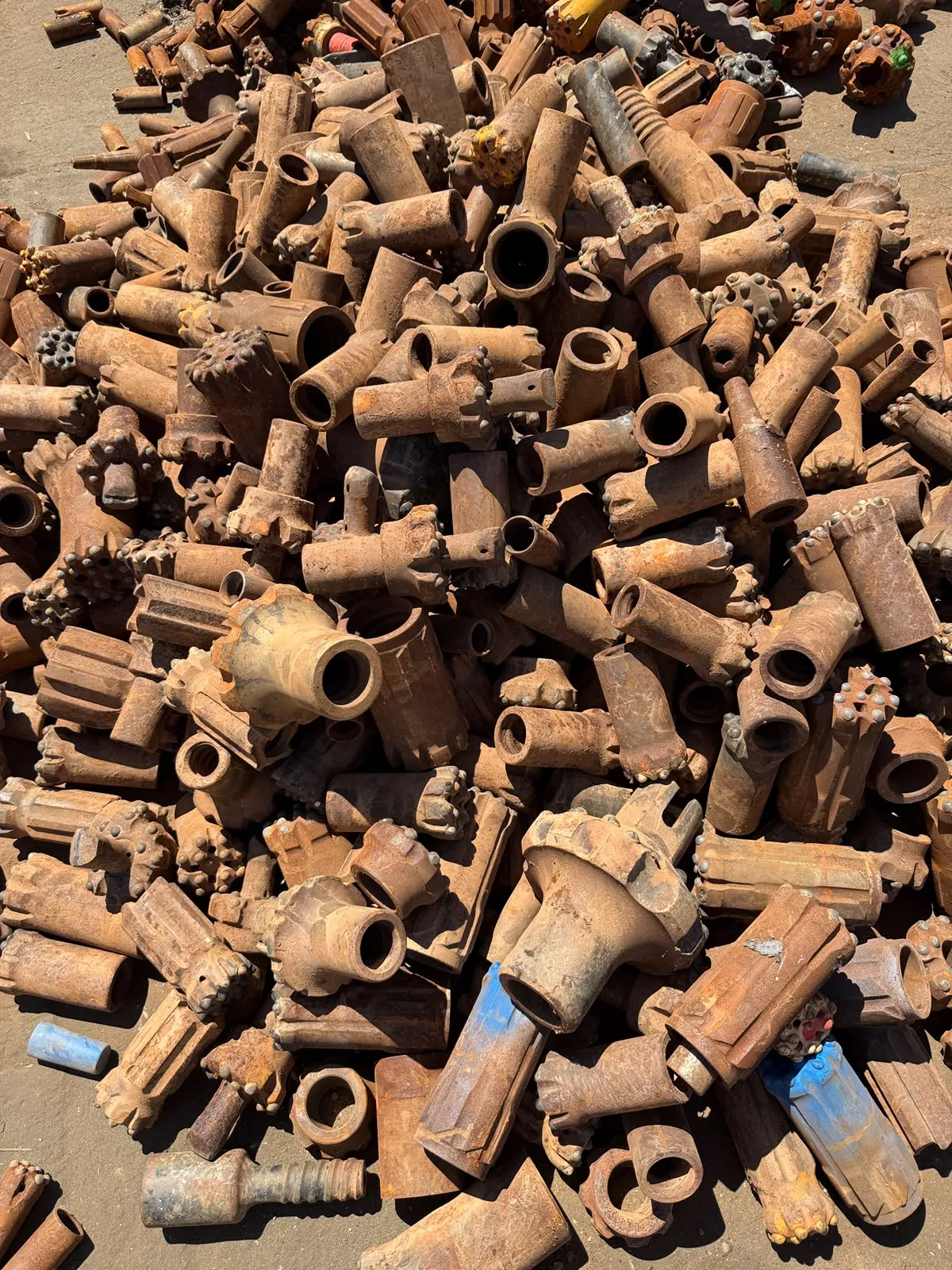
Worn drill string, ground engaging tools, plant wear liners and workshop tooling from WA mine sites, from a contractor’s ute load through to a shutdown-scale clearance. We sort each load by alloy, weigh it at the Malaga yard and price it by grade and material content.
 Mining · WA-wide
 A general scrap yard often prices a worn carbide button bit and a bent length of angle iron the same way: by weight, mixed. Mining sites generate a disproportionate share of high-value alloy, tungsten carbide in the drill string, manganese and chrome alloy in mill liners and crusher wear parts, and that value gets flattened every time it’s sold into a mixed load.
We sort every batch by alloy family before it’s priced, so carbide, wear steel and non-ferrous cable each get valued on what they are. This matters most at shutdown, when a laydown yard or a workshop bench accumulates months of worn tooling in one go and the gap between a mixed rate and a sorted rate compounds across the whole load.
For the background on why worn tooling still carries recoverable value, see Why your mining drill bits are worth more than you think and Goldfields geology: why local rock makes drill bits more valuable.
Whether a bin sits on site during a shutdown is decided case by case, weighing the relationship, location, material and expected weight; bins are generally set up for repeat customers rather than a one-off pickup. A site walkthrough ahead of a shutdown or laydown clear-out is free but needs to be booked, since the team is not always at the yard.
A quotation on a shutdown-scale load carries its own expiry, typically 24 or 72 hours depending on the material and market, so ask for it close to the clear-out window rather than months ahead.
Mining · WA-wide Drill string, GET, wear liners and workshop tooling stay in separate material streams before pricing.
Whether it’s a ute load or a multi-truck shutdown clearance, the sequence is the same.
Whether it is one drum or a shutdown clearance, every load follows the same weighing, sorting, documentation and settlement process at Malaga.
Every load is weighed on scale before it’s priced, so the number you’re paid on matches the number on the docket.
Drill string, GET and wear liners are separated and assessed by material type.
A batch record travels with every load, useful alongside your own site record-keeping.
There’s no cost for the bin or the freight. The bin travels back to us on an existing backload run rather than on freight we charge for, which matters at shutdown when you need a bin on the ground before the tooling starts accumulating. The full bin moves on your existing backload; we don’t run a skip truck to pick it up.
Furberg, Arvidsson and Molander, writing in Journal of Cleaner Production 209 (2019), found reductions of 22 to 100 percent across the metal categories they assessed.
Tungsten is a critical mineral with a finite global supply, and most of what a mine site retires is still valuable alloy.
Sandvik, press release 14 March 2023: secondary tungsten production uses 70% less energy and produces 64% less CO2 than primary extraction. Sandvik runs a competing buyback programme, so treat this as company data, not an independent benchmark.
Weight, alloy grade and destination are logged for each load off your site, useful documentation to sit behind your own reporting without you building the audit trail yourself. That matters most at shutdown, when what leaves your site needs accounting for as much as what’s inside the fence.
Shutdown or laydown yard clearing coming up? Send photos of what’s on site and we’ll give you an indicative view of what it’s worth, including how the free bin works.
Malaga, WA · Free bin and freight, on backload · Priced by grade and alloy content