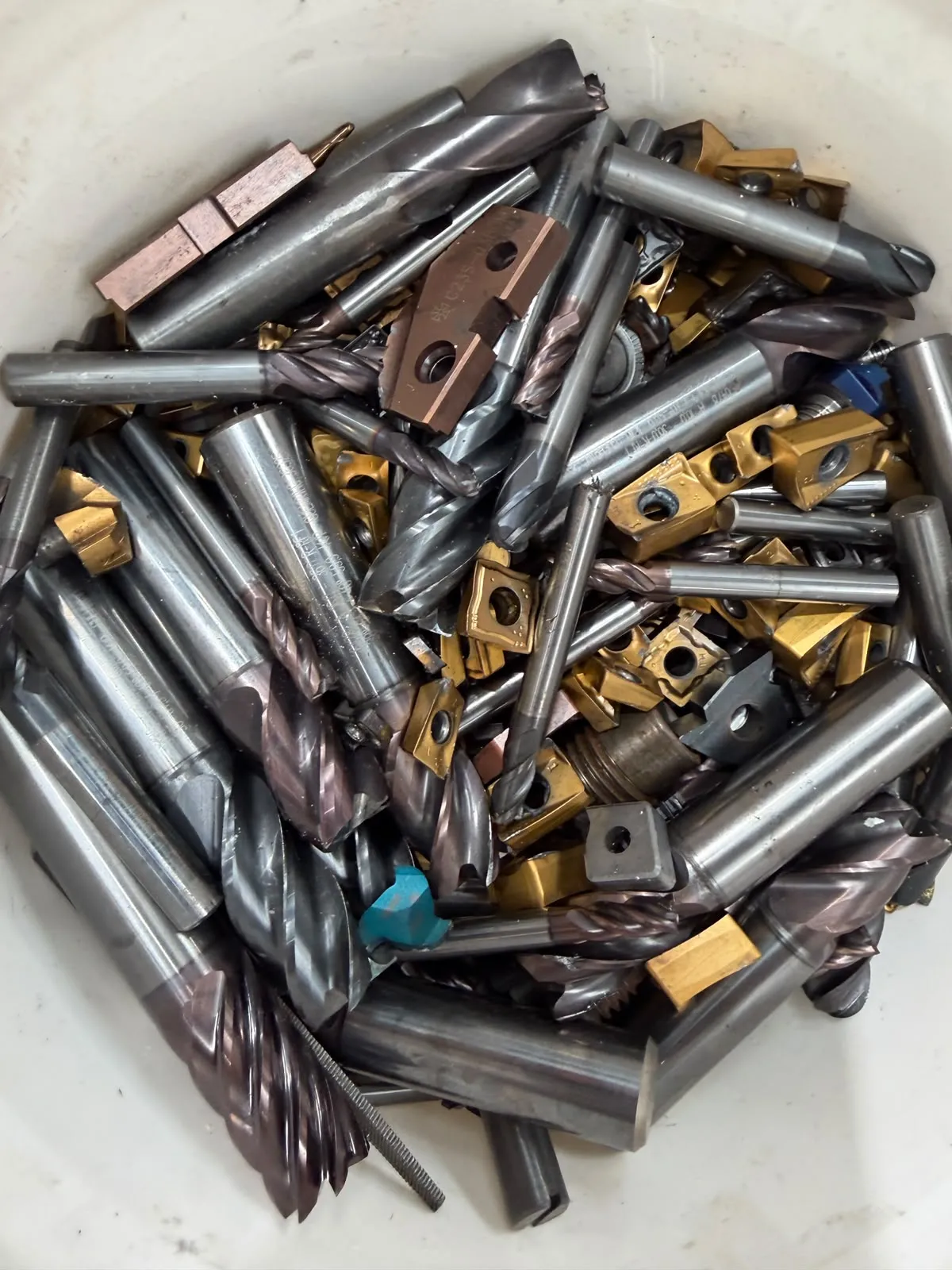
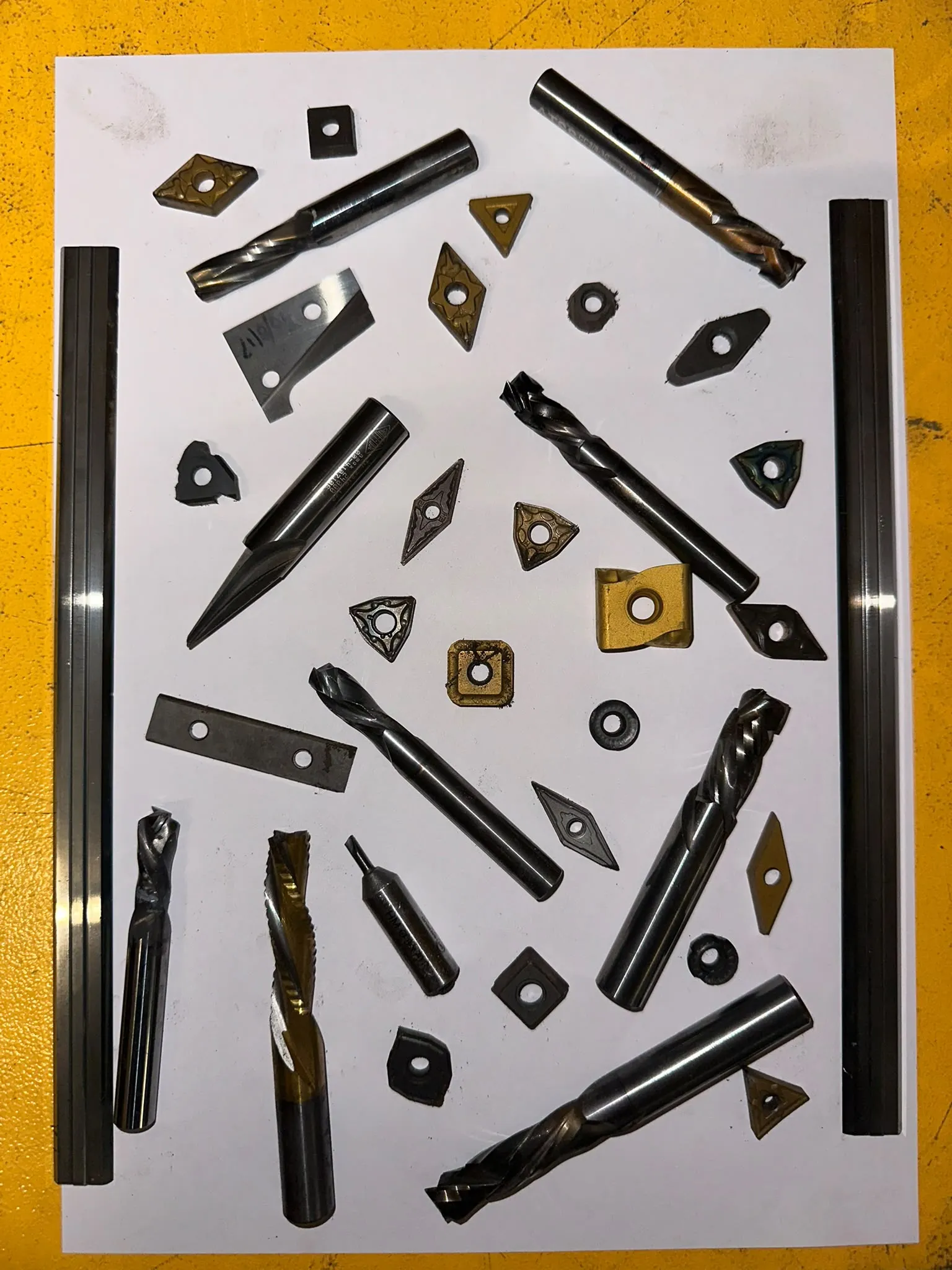
A tool-room bin rarely holds one material. Solid carbide end mills, coated inserts and high-speed steel drills end up in the same container because they all look the same once they’re worn and pulled off a machine. Priced as one mixed load, the whole bin is valued as the cheapest thing inside it, which usually means the carbide gets priced like high-speed steel.
Kept apart, each material is priced on what it contains. Carbide end mills, inserts and dies are assessed for tungsten and cobalt content against the current market price for tungsten, and high-speed steel is priced against its own reference. Grinding sludge is assessed for the carbide fraction it still holds, drum by drum.
For detail on how carbide inserts are priced, see carbide insert recycling, and for high-speed steel tooling see high-speed steel recycling. If solid carbide and HSS look identical once they’re worn, our carbide identification guide covers density, spark and magnet tests you can run on the bench before you call us.
Whether we provide a bin depends on the relationship, location, material and weight, decided case by case rather than a standard offer. A one-off drill bit bin normally needs more than 2,000 kg to make sense; smaller workshop loads can still be brought to Malaga by appointment or quoted individually. Yard visits and walk-throughs are free, but call ahead or book first, because the team isn’t always on site.
Every quotation we issue states its own expiry on the document itself, either 24 or 72 hours depending on the material and market conditions, so you know how long the number holds.